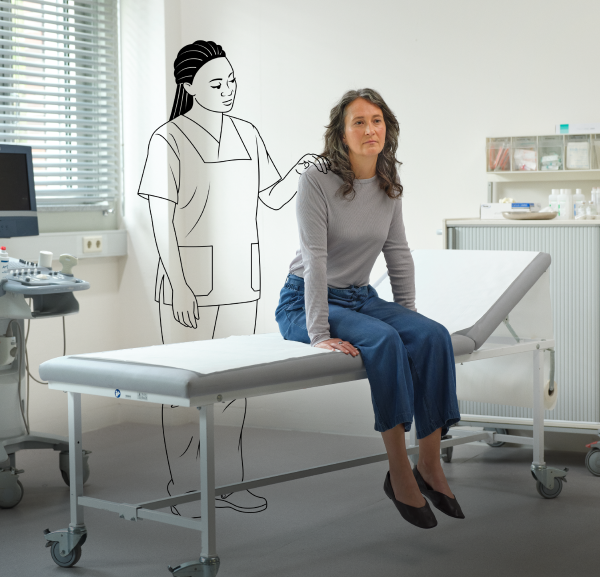
Amendments to the Protection Against Violence Act
In May 2026, the Bundestag passed amendments to the Protection Against Violence Act (GewSchG). The aim of the legislative is to provide even better protection for people affected against acts of violence, threats and stalking. The German Bundestag has adopted the following measures:
- Electronic monitoring (electronic ankle monitor): in high-risk cases, family courts may order electronic monitoring (eAÜ). The perpetrator must then wear an electronic ankle monitor. This makes it easier to enforce prohibitions on coming near the person affected or entering certain locations. The electronic ankle monitor tracks the perpetrator’s whereabouts. At their request, people affected can be provided with a receiver that warns them if the perpetrator comes near them. A judge may order electronic monitoring only if it is expected that the perpetrator will breach prohibitions on coming near the person affected or entering certain locations, thereby creating a specific risk to the life, physical integrity, liberty or sexual (high-risk case) of the person affected. Electronic ankle monitors are a significant intrusion into the perpetrator's private life. A court-ordered ankle monitor can be enforced by the court through a fine or detention, for example, if the perpetrator refuses to wear the ankle monitor despite the order, removes it, or otherwise impairs its functionality.
- Mandatory anti-violence training: Anti-violence training is a long-term preventive measure aimed at behavioural change to prevent further violence. In behavioural intervention programmes, perpetrators are encouraged to become aware of the different forms of violence, recognise their own violent behaviour and reflect on and address that behaviour. They are meant to learn nonviolent communication and de-escalation techniques. This can help break behavioural patterns and prevent relapses. In violence prevention counselling, perpetrators are shown ways to maintain control over their own behaviour.
- Longer prison sentences for violations of protection orders: If a perpetrator breaches a court protection order, for example a prohibition on coming near the person affected, the maximum prison sentence will increase from two years to three years from 2027.
- Information from the National Weapons Register: The family court may obtain information from the National Weapons Register to better assess situations of risk and protect people affected by domestic abuse more effectively.
- Support from a trusted person in proceedings under the Protection Against Violence Act: as a general rule, these proceedings are not heard in public. The Act now explicitly amended to allow people affected to be accompanied by a trusted person during hearings or oral proceedings.
What protection measures will be available under the Protection Against Violence Act in the future?
With electronic monitoring and mandatory anti-violence training, family courts can protect people affected more effectively. In addition, the Protection Against Violence Act offers many other protective measures:
- Exclusive use of the home: The person affected by domestic abuse can request that the perpetrator be required to leave the home, at least temporarily, and prohibited from entering it. The core principle is: The person who commits the violence must leave.
Protective Order: The family court imposes clear requirements and prohibitions on perpetrators to protect the affected person from further danger.
Possible measures include, for example:
- Kontaktverbot (Prohibition on contacting you): the perpetrator is not allowed to contact the affected person, including by phone, email, letter or chat message.
- Näherungsverbot (Prohibition on coming near you): also known as an Annäherungsverbot, means the perpetrator is prohibited from coming near the affected person.
- Aufenthaltsverbot (Prohibition on entering certain locations): the perpetrator may not enter any locations specified by the court in the order (such as the affected person’s home or workplace).
- Preventive measures: affected individuals do not have to wait until the perpetrator physically injures them. Even the threat of violence or acts of stalking can be sufficient grounds for issuing a protection order. To do so, the affected person files a petition with the family court to issue a protection order. If the legal requirements are met, the court will issue protective orders such as prohibitions on coming near the person affected, and other protective measures. In most cases, the family court issues the order within a few days in the form of an interim court order (einstweilige Anordnung).
Additional regulations and laws for protection against domestic abuse
People affected by domestic abuse in Germany need protection and support. Acts of abuse in intimate relationships and within the family must result in serious consequences. That is why the state protects people who experience abuse through various laws and measures:
- Custody and visitation rights: Children have the right to a violence-free upbringing. If domestic abuse occurs within the family, this can pose a risk to the child’s well-being. Because violence in the family stresses and traumatises children – even if the violence is not directed at them. The parent who commits the violence must then expect consequences regarding their custody and visitation rights. In May 2026, the Federal Ministry of Justice and Consumer Protection (BMJV) published a draft bill for a comprehensive reform of the law governing parent-child relationship. A key focus of this reform is improving protection against domestic abuse in matters of child custody and contact with a child.
- Choice of court in family law: Under the BMJV’s plans, applicants in family law proceedings – for example, proceedings concerning contact, custody or maintenance – will in future be able to choose between different courts with jurisdiction. In cases of domestic abuse, the proceedings will no longer have to be conducted in the court with jurisdiction over the children's place of residence. This means that, following a move, the perpetrator will no longer automatically learn the whereabouts of the children and the affected person through the proceedings. To this end, in May 2026 the BMJV published the draft bill to Improve the Protection of Victims of Domestic Violence, Strengthen the Position of Children in Proceedings and Improve Procedural Efficiency. The draft bill also includes a provision clarifying that, in proceedings concerning parent-child matters – such as proceedings on contact or custody – courts will in future be expected to examine the circumstances carefully and investigate where there are indications of domestic abuse, in order to better protect people affected by domestic abuse.
- Divorce without a year of separation: for certain cases of domestic abuse, the law is to be clarified so that, on the application of the person affected, a marriage may be dissolved before the end of the one-year separation period. This change is also part of the planned reform.
- Protection against digital abuse: The Law Against Digital Violence will give people affected by digital abuse better tools to take action against deepfakes, cyber-grooming and hate speech online. To this end, the Federal Ministry of Justice and Consumer Protection published a draft bill in April 2026.
How are those affected supported during court proceedings?
Legal proceedings place a heavy burden on people affected by domestic abuse. That is why psychosocial support in criminal trials is available. Psychosocial support includes qualified non-legal counselling, providing information and offering assistance during criminal proceedings. Under the Code of Criminal Procedure (StPO), people who have been harmed by serious criminal offences are legally entitled to this support. Psychosocial support in criminal trials provides crucial assistance during both the investigation and the court proceedings. To help ensure that more serious criminal offences are reported and prosecuted, particularly in areas with high levels of underreporting such as domestic abuse, more people will in future be entitled to psychosocial support in criminal trials, and the rules governing its practical implementation will be improved. To this end, the Federal Cabinet approved a draft bill in March 2026.
A comparison of the regulations on psychosocial support in criminal trials
| Old regulations | Planned changes | |
|---|---|---|
| Better access to psychosocial support in criminal trials | Adult victims had to prove that they were particularly vulnerable in order to receive free psychosocial support in criminal trials. | Following serious criminal offenses, adult victims receive free psychosocial support in criminal trials. They do not have to meet any additional requirements. |
| Right to legal representation | People affected by criminal offences involving domestic abuse generally had to pay for legal representation themselves. | People affected by domestic abuse in serious cases are entitled to legal representation during criminal proceedings. Legal representation significantly strengthens their position in the proceedings. |
| Psychosocial support in criminal trials for children, adolescents, and persons with disabilities | Until now, children and adolescents, as well as persons with disabilities, had to apply for psychosocial support in criminal trials, just like adults. | In the future, children, adolescents, and people with disabilities will also be able to receive psychosocial support in criminal trials on the court's own initiative. |
In addition, the compensation for psychosocial support providers will be increased.
What legal measures can I recommend to people affected to stop all contact with the perpetrator immediately?
The Protection Against Violence Act (GewSchG) is the primary tool in Germany for protecting people affected from further. People affected can apply for a court protection order under the Protection Against Violence Act. The order often includes strict prohibitions on coming near or contacting the person affected. Breaching such an order is a criminal offence and may also be enforced by the family court through a fine or detention. The police provide immediate protection for people affected and can intervene immediately if the perpetrator violates the order.
How can I alleviate the concerns of those affected that the perpetrator is not being adequately monitored and supervised?
Electronic monitoring, which is intended for high-risk cases, allows the perpetrator’s movements to be monitored around the clock. A monitoring centre staffed around the clock is alerted by the monitoring system if the perpetrator comes near the person affected. If the person affected has chosen to use a receiver, they will also receive an alert from the monitoring system if the perpetrator breaches the prohibition on coming near them. The monitoring centre handles the case and immediately alerts the police if it believes the affected person is in danger.
How does the technology work when electronic ankle monitors are used as a protective measure against domestic abuse?
The technology is based, among other things, on GPS tracking in real time. The ankle monitor continuously transmits its location to a monitoring centre. The system automatically compares the location data with predefined restricted zones, such as a 500-meter radius around the registered address of the person affected or around the affected person themselves. If the perpetrator enters this zone, an alarm is immediately triggered at the monitoring centre. Depending on the specific case and the level of risk, the monitoring centre will then notify the police and contact the affected person and/or the perpetrator by phone.
Can the family court or criminal court order the perpetrator to undergo therapy?
What support services can I recommend to people affected who do not want to report the abuse because they are afraid of going to court?
Inform people affected about their legal entitlement to psychosocial support in criminal trials. Certified psychosocial support professionals prepare the person affected both emotionally and by providing information for the investigation and criminal proceedings. The psychosocial support professionals accompany people affected to police interviews and the main trial. This professional support plays a crucial role in helping to prevent any secondary traumatisation of people affected. The legal entitlement to psychosocial support applies in criminal proceedings in particularly serious cases.
What resources can I use in my work?
- Women's Refuge Search: At www.frauenhaus-suche.de, you can find up to date information on available spots in refuges nationwide.
- Federal Association of Women’s Counselling Centres and Women’s Emergency Hotlines (bff): The website www.frauen-gegen-gewalt.de offers a detailed search function for specialist support services, including those providing psychosocial support in criminal trials.
- Violence against Women Helpline: By calling 116 016 (free, anonymous, multilingual, 24/7), people affected, those around them and professionals can receive qualified initial counselling.
- BMJV Help-Info Platform: At www.hilfe-info.de, people affected by crimes as well as professionals can find useful information.
Additional Materials
Further information and materials on the Your Courage Finds Support campaign are available in the press section. A press release from the Federal Ministry of Justice and the campaign visuals are available for download here.
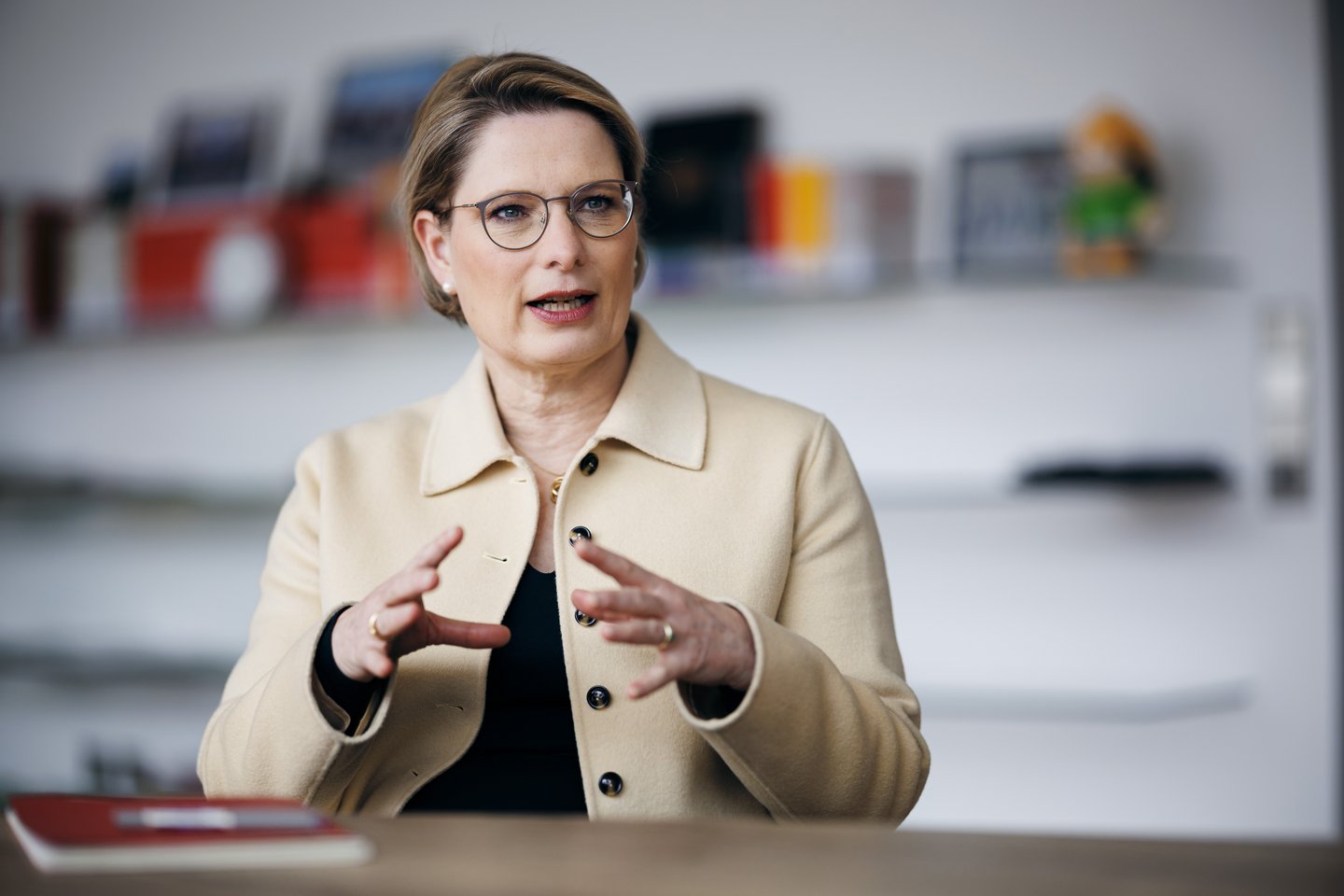
Interview with Dr Stefanie Hubig, Federal Minister of Justice and Consumer Protection
Transcript of the interview
Physical assaults, verbal abuse, threats, or financial control: all of these can constitute domestic abuse, which, according to statistics, affects one person every two minutes in Germany.
“Domestic abuse occurs in all segments of the population. Whether you look at rural areas or cities, social housing or single-family homes, people with migraton background or without one. However, across all these groups, the vast majority of those affected are women. We estimate that this accounts for over 70 percent of cases,” says Dr Stefanie Hubig, Federal Minister of Justice and Consumer Protection, who is committed to better protecting people affected but also aims to address the perpetrators. “We have now passed a law through the German Bundestag that introduces electronic ankle monitors for perpetrators. And in the future, family courts in Germany will be able to order anti-violence training for perpetrators so that they learn that violence is not a solution and that they have alternatives.” The new law will take effect next year. In addition, there are plans to ensure that domestic abuse is taken into account in future decisions regarding custody and visitation rights, and that people affected by domestic abuse are entitled to professional support during court proceedings.
However, the current campaign is already aimed at raising awareness, particularly in rural areas. “We see that there are far fewer support services in rural areas than in cities and metropolitan areas. And we simply want to raise awareness of the issue once again in rural areas. And one thing is also clear: Ultimately, we need a shift in societal awareness—not just in rural areas, but of course in cities as well. And that means, first of all: we all need to pay attention. And second, it must be absolutely clear: The shame must change sides.”
Anyone affected by domestic violence, or anyone who knows someone affected and wants to help, can contact the free 24-hour Violence Against Women Support Helpline by calling 116016. They can also visit the new website, raus-aus-gewalt.de, which provides information and details of available support services.